
Stump Grinding in Cleveland, TX: Prices, 811 and Soft Ground
Stump grinding in Cleveland, Texas runs about $110 to $193 for one medium stump, going by LawnStarter's Houston figure, against a national range of $131 to $438 and a $272 average (updated Oct 5, 2026, checked Nov 18, 2026). Because a grinder digs below the surface, contact 811 first: Texas811 tells homeowners to call two business days before digging, and state law sets 48 hours as the minimum notice for excavation, not counting weekends and legal holidays.
Around Cleveland, how wet the yard is, how big the root flare is and what is buried nearby shape the job.
What a grinder leaves behind
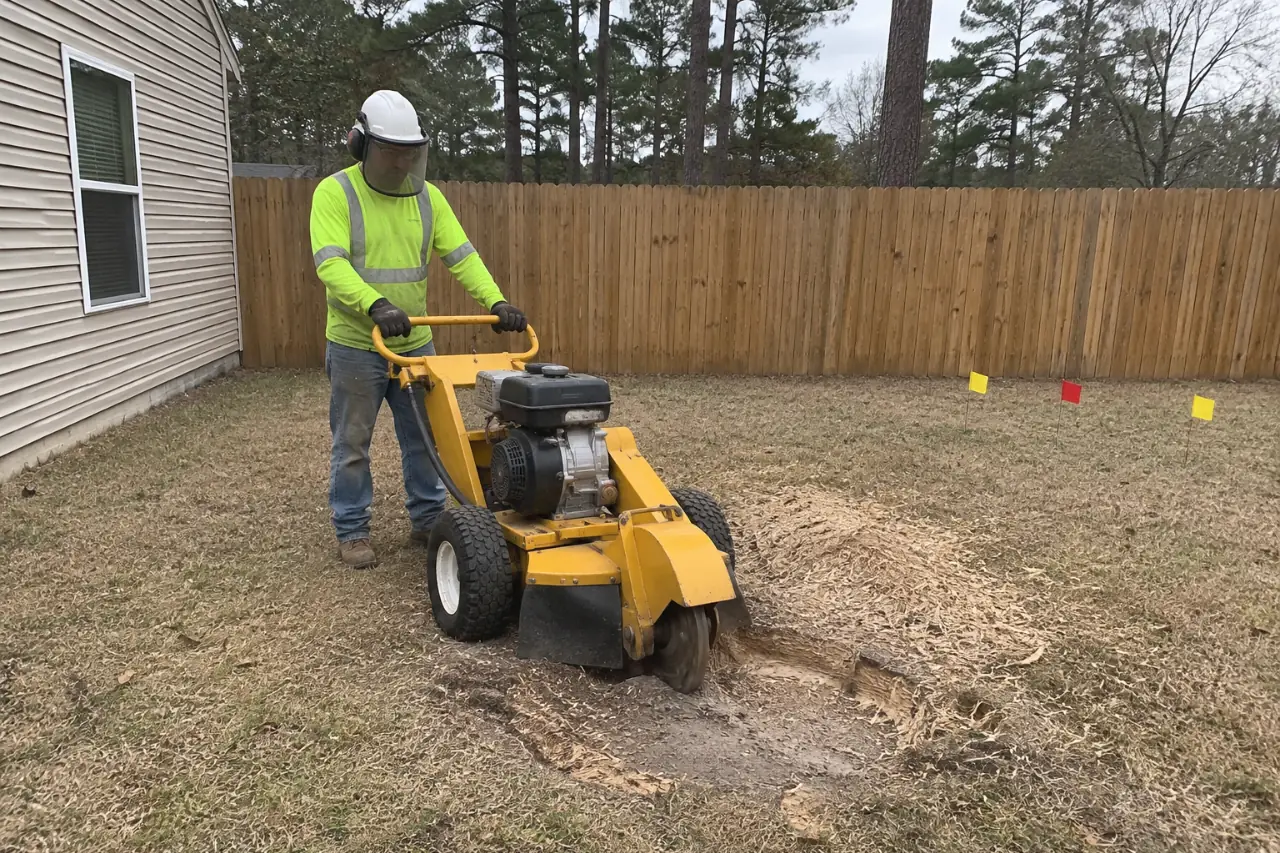
The machine swings a toothed cutting wheel back and forth across the stump, shaving it to chips layer by layer until it's under the surface of the yard. Afterward, expect:
- A shallow hole roughly the width of the stump and its root flare, filled with a mix of wood chips and soil.
- A pile of grindings, often far more than the stump looked like it would make. Pine grindings are resinous and smell of turpentine for a while.
- Roots that stay in the ground. Grinding takes out the stump, not the root system. The roots that run out under the lawn are left to rot in place.
Ask how deep the grinder will go. Enough depth to lay sod over is one thing; enough to pour a slab or set fence posts in the same spot is another, and it should be said in the price.
Call 811 before any grinding or digging
Texas Utilities Code §251.151 says a person who intends to excavate must notify a notification center "not earlier than the 14th day before" and no later than "the 48th hour before" the excavation begins, "excluding Saturdays, Sundays, and legal holidays" (Tex. Util. Code §251.151, checked Nov 18, 2026). Texas811 puts it in plain terms for homeowners: you or your contractor contact 811 two business days before digging, "even if you're working in your own backyard," and "811 is a FREE service to you!" (Texas811, checked Nov 18, 2026).
A grinder can reach well below the surface around a big stump, close enough to a gas service, a buried electric line or a water line to matter. Ask the contractor whether they call in the locate ticket or whether you should. Also point out anything you put in the ground yourself: a line to a shop or well house, sprinkler pipe, or septic lines and spray heads on a rural lot.
Wet yards and getting the grinder in
Grinders range from walk-behind machines that fit through a 36-inch gate to tracked and towed units that weigh well over a ton. In flatwoods soil over a perched water table, as Texas Parks and Wildlife describes the ground in this part of East Texas (checked Nov 18, 2026), the heavy ones can sink in after rain. If the stump sits in a low corner of the yard or near a ditch that holds water, it may make sense to wait for a dry week or use a smaller machine and accept a longer job. Tell the contractor about gates, septic areas and soft spots when you call.
Grind it or pull it out?
Pulling a stump with an excavator takes out the root ball and leaves a large hole that has to be filled and packed. That's sometimes the right call when you're building on the spot. It's also more ground disturbance. On rural property outside the city, Liberty County's flood damage prevention ordinance counts "filling, grading, paving, excavation" as development in its special flood hazard areas and routes permits through the county's floodplain administrator (Liberty County ordinance, accepted Oct 13, 2020, checked Nov 18, 2026). Pulling a few stumps from a yard is rarely a permit question, but a lot-clearing job with dozing and fill near a creek can be. See wooded lot clearing.
Stumps and root plates after a storm
When a pine or oak blows over in soaked ground, the root plate stands up on edge with soil still packed in it, leaving a matching hole. The Texas A&M Forest Service says not to try to stand a mature tree back up if it leans more than 30 degrees or has uprooted with more than three inches of roots exposed (Texas A&M Forest Service, checked Nov 18, 2026). Once the trunk is cut away, a root plate can rock back toward its hole on its own weight, which is a hazard to anyone standing in the hole. Crews handle that by cutting in an order that keeps the plate from moving, then grinding the plate or pushing it back and grinding it flush.
What to do with the grindings
- Keep them as mulch for beds, paths or low spots, away from the house foundation.
- Have them hauled. Frontier's monthly bulk and brush pickup in the city takes yard waste "cut, tied & bundled, 40-pound limit" and does not take contractor tree debris (City of Cleveland, Frontier guidelines, checked Nov 18, 2026). A pile of grindings is the contractor's to haul unless you agree otherwise.
- Fill and seed. Rake out most of the chips, fill with topsoil, let it settle, then seed or sod. Chips left in the hole break down and the spot sinks over time.
What grinding costs
| What | Range | Source |
|---|---|---|
| One medium stump (10 to 30 inches across), Houston area | $110 to $193 | LawnStarter, updated Oct 5, 2026 |
| National typical job | $131 to $438 (average $272) | LawnStarter, updated Oct 5, 2026 |
| Per inch of diameter | $2 to $5 | LawnStarter; Angi ("2025 Data") |
| Typical minimum charge | About $100 | LawnStarter; Angi |
| 24-inch stump | $148 to $220 | Angi ("2025 Data") |
| Each extra stump | About $40 to $75 | Angi ("2025 Data") |
Sources: LawnStarter and Angi. Big pine stumps with wide root flares, stumps in soft ground and stumps behind narrow gates cost more. There's no published Cleveland price list; the contractor prices it on site. More on the cost page.
Stump questions
- Will a pine stump sprout back?
- Loblolly and slash pine stumps generally don't send up sprouts, so grinding one is mostly about looks, mowing and space. Many hardwood stumps can sprout, so sweetgum and tallow stumps are worth grinding well below grade.
- How long does one stump take?
- It depends on the size, the wood and the machine. A small stump can take minutes; a big pine with a wide flare takes much longer.
- Do I need to be home?
- Usually not, if the gates are open, the 811 marks are in, and the contractor knows which stumps to grind and how deep.